











Top Docebo AI role play alternatives for team training in 2026
Docebo's AI virtual coaching looks like a readiness tool.
Agents practice conversations, get a transcript, and move on.
The problem is that the transcript goes only to the learner, not to the manager who needs to know whether that agent is ready for a live call.
That's a significant gap for QA teams - in organizations with 50+ agents, this can mean hundreds of untracked practice sessions per week with no visibility into readiness metrics.
If you can't see practice results across your team, you can't track readiness, identify coaching needs, or certify agents with any confidence.
Add English-only support and a credit model where overage costs can add 20–40% to annual spend for teams running 10+ practice sessions per agent per month, and teams start looking elsewhere.
ReflexAI Prepare, Hyperbound, Deelan, 360Learning, WorkRamp, and TalentLMS each solve different parts of this problem.
Here's how to figure out which one fits your situation.
Why do teams look for Docebo AI role play alternatives
Docebo is a capable LMS with strong content delivery and compliance tracking, and its AI virtual coaching feature lets learners practice conversations with a synthetic AI character inside the Creator lesson builder. Teams start looking for alternatives when they realize the feature's current limitations around manager visibility, language support, and credit-based pricing create friction for organizations that need frequent, realistic practice at scale.
Course completion does not prove conversation readiness
A new contact center agent can complete onboarding in Docebo, pass the assessment, and still stumble on their first escalation call - research shows up to 60% of new agents report feeling unprepared for their first difficult customer interaction despite passing knowledge assessments. Knowledge retention and behavioral readiness are not the same thing, and Docebo's completion metrics do not capture the dimensions that matter most in live conversations:
- Tone and empathy: Whether the agent communicated with the right emotional register for the situation
- Protocol adherence: Whether they followed the correct steps when the caller became upset or confused
- Real-time adaptation: Whether they adjusted their approach when the conversation took an unexpected turn
Learner feedback does not always give managers team visibility
Docebo's AI virtual coaching generates a report and transcript after each practice session, but at the time of writing, that report is visible only to the learner, not to managers or administrators. For QA leaders who need to track readiness across a team, identify coaching gaps, or certify agents before they take live calls, this gap can mean 10–15 hours per week spent manually collecting practice feedback that should be automated.
English-only roleplay can limit global teams
Docebo's AI virtual coaching is currently available in English only. Organizations running multilingual contact centers or training teams across regions face a hard constraint when agents need to practice in Spanish, French, Mandarin, or any other language their customers speak.
Credit-based AI costs can make practice hard to scale
Docebo uses a credit-based consumption model for AI features including virtual coaching, with credits consumed per scenario and per interaction mode and overage billing applying when credits run out. For teams that want agents to practice 5–10 scenarios per week throughout onboarding and beyond, credit consumption can exceed allocated budgets by 30–50%, making repetition a direct budget constraint.
Is your team facing similar constraints with Docebo's current feature set?
What should a Docebo AI role play alternative include
Your agents need to practice the conversations they will actually have, in the channel they actually work in, scored against the criteria your QA team already uses. The checklist below reflects what matters for organizations handling high-stakes conversations where readiness is measured by performance under pressure, not completion rates.
Realistic voice and chat practice
Voice practice requires the simulation to process spoken input, generate a realistic response, and convert it back to speech in real time, which is a meaningfully different technical challenge than text-based chat. The best tools offer configurable personas with distinct tones, emotional responses, and communication styles rather than a single generic AI character that sounds the same in every scenario.
Configurable personas and custom scenarios
Generic roleplay templates do not reflect the specific conversations a team handles. The faster a training team can build a new scenario from a script, prompt, or existing file (ideally in minutes, without engineering support), the more likely practice stays current with real operational needs. Let's say your compliance team releases a new disclosure script on Monday - can your training team have agents practicing it by Tuesday, or does it take two weeks of development time?
Custom scoring and coaching feedback
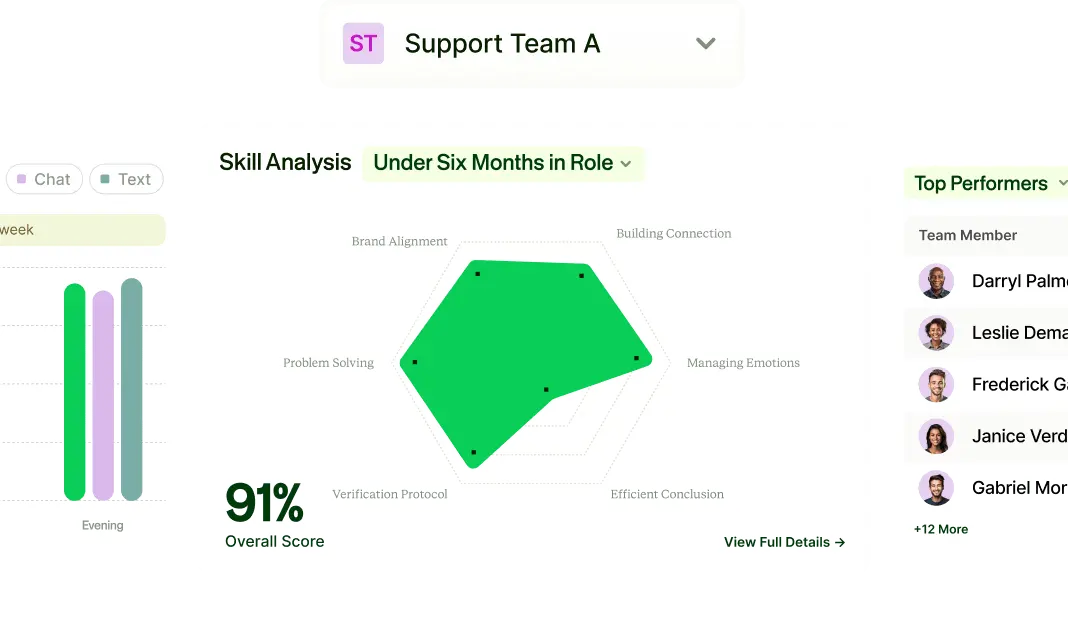
A tool that scores on fixed dimensions like clarity, confidence, and energy will not align with a QA team that measures empathy, protocol adherence, and de-escalation technique. Coaching feedback should be tied to specific moments in the conversation, not boilerplate advice that could apply to any interaction:
- Custom dimensions: Teams define scoring criteria that mirror their existing QA rubric
- Interaction-level feedback: Feedback tied to specific moments in the conversation, not just an overall score
- Immediate availability: Feedback delivered right after practice, not batched or delayed
Software practice alongside conversation practice
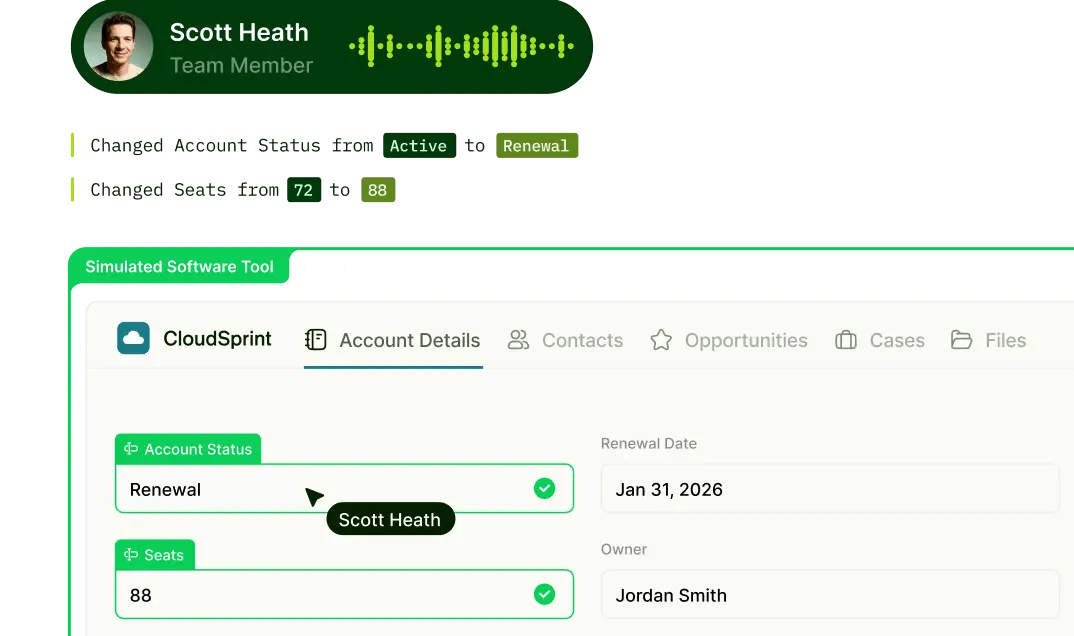
Contact center agents do not just talk to customers. They navigate CRM systems, ticketing tools, and knowledge bases at the same time, and a roleplay tool that only simulates the dialogue misses half the job. ReflexAI's Prepare product includes software overlays that let agents practice navigating tools like CRMs or EMRs simultaneously with the conversation simulation, so practice reflects the actual conditions of live work.
Security for sensitive conversations
Teams in healthcare, crisis support, financial services, and contact centers handle sensitive data during training simulations, including realistic patient scenarios, caller distress, or personally identifiable information. ReflexAI holds SOC 2, HIPAA, HITRUST, GDPR, and ISO 27001 certifications because training simulations in regulated environments require the same protections as live customer data.
Which of these capabilities matters most for your team's training goals?
Top Docebo AI role play alternatives for team training
The tools below range from purpose-built simulation platforms to broader enablement tools that include roleplay as one component. Each entry focuses on the roleplay and simulation capability specifically, since that is what teams evaluating Docebo alternatives are trying to solve for.
ReflexAI Prepare for high-stakes conversation readiness
ReflexAI Prepare is purpose-built for teams handling critical conversations in contact centers, healthcare, crisis lines, and similar environments. It offers voice-first and chat simulations in 25+ languages, configurable personas built from a single prompt, and custom scoring dimensions that mirror the organization's own QA rubric. Prepare includes software overlay simulations so agents can practice navigating CRMs or EHRs while handling a conversation. The platform connects to ReflexAI Assure, the company's automated QA product, so training outcomes tie directly to live performance and flagged interactions can be converted into personalized simulations. ReflexAI meets SOC 2, HIPAA, HITRUST, GDPR, and ISO 27001 standards, making it a fit for regulated industries where training data requires strong protections.
Choose ReflexAI when your team handles emotionally complex, regulated, or high-stakes conversations and you need practice to connect directly to live QA outcomes.
Hyperbound for sales roleplay practice
Hyperbound is built for B2B sales teams who need to practice cold calls, discovery, objection handling, and deal progression, with AI buyer personas trained on real sales call data and real call scoring that connects practice to live performance. Choose Hyperbound when your primary use case is sales enablement and reps need to practice specific deal stages and objection patterns. Avoid it when your team handles contact center, healthcare, or crisis conversations where compliance requirements and emotional complexity differ significantly from sales interactions.
Deelan for revenue team onboarding
Deelan is an adaptive learning platform with AI roleplay built in, offering voice and chat modes, audio feedback, and course generation from a single prompt. It is faster to set up than a full LMS replacement and best for organizations that want roleplay and course content in one tool without enterprise LMS complexity, though its simulation depth and customization options are more limited than purpose-built platforms.
360Learning for collaborative learning with roleplay
360Learning is a collaborative LMS where subject-matter experts author content peer-to-peer, with AI-assisted course creation included. Its roleplay capability is more limited than purpose-built simulation tools, making it a better fit for teams that want broader learning management alongside some practice functionality than for teams whose primary need is realistic conversational simulation with custom scoring.
WorkRamp for enablement programs with practice
WorkRamp is an enablement platform with strong Salesforce integration and a separate AI Practice add-on, with roleplay features gated to higher tiers. It fits Salesforce-native organizations that want training and CRM data in one workflow, though it is not purpose-built for high-stakes or regulated conversation practice where compliance, emotional adaptivity, and software overlay simulations are required.
TalentLMS for simple employee training with basic practice
TalentLMS offers transparent pricing, fast setup, and AI coaching included in base plans, with basic practice features that lack persona customization, voice-first capability, and custom scoring. It fits smaller teams with straightforward training needs and limited budget, though it is not a fit for organizations that need emotionally adaptive, voice-first, or compliance-grade simulations.
Tool | Best for | Roleplay modality | Custom scoring | Multilingual | Key limitation |
ReflexAI Prepare | High-stakes conversations | Voice and chat | Yes | 25+ languages | Not a general LMS |
Hyperbound | B2B sales teams | Voice and chat | Limited | English only | Sales-focused only |
Deelan | Revenue team onboarding | Voice and chat | Limited | English only | Less simulation depth |
360Learning | Collaborative learning | Chat | No | English only | Roleplay is secondary |
WorkRamp | Salesforce-native enablement | Chat | No | English only | Roleplay gated to higher tiers |
TalentLMS | Small teams, basic needs | Chat | No | English only | No voice or custom scoring |
Which tool aligns best with your team's conversation types and compliance requirements?
How should teams compare AI role play alternatives
Three questions clarify whether a tool will fit into existing workflows, scale with the team's practice needs, and connect training outcomes to live performance. Getting these wrong means buying a tool your agents use once during onboarding and never touch again - industry data suggests 40–60% of training software sees less than 10% monthly active usage after the first 90 days.
Decide whether to replace Docebo or add a simulation layer
Some teams will want to replace Docebo entirely; others will want to keep it for content delivery and compliance tracking while adding a dedicated simulation tool on top. Purpose-built simulation tools like ReflexAI can operate alongside an existing LMS rather than replacing it, which lets teams keep their content library and compliance infrastructure while upgrading the practice and readiness layer.
- Replace: Choose a tool that handles both content management and simulation, accepts SCORM imports, and can replicate Docebo's reporting functions
- Add a simulation layer: Choose a tool that integrates with your existing LMS, keeps agents in familiar workflows, and focuses exclusively on conversation practice and scoring
Run a pilot with real scenarios and real scoring
The most reliable way to evaluate an AI roleplay tool is to test it with scenarios the team actually uses, not vendor-provided demos. Let's say your agents handle 30% of calls involving billing disputes - build that exact scenario during your trial and see whether the AI responds with the objections and emotional escalation patterns your agents actually encounter. Build one or two real scenarios during a trial, run them with actual agents or trainees, and review the scoring output against the team's existing QA rubric. If the scoring dimensions cannot be customized to match what the team already measures, the tool will create a second set of metrics that do not align with how performance is evaluated in live conversations.
Connect simulation results to live QA
A completed simulation that never connects to live performance data is just a training activity. When a simulation platform connects to automated QA, training leaders can see whether skills practiced in simulation are showing up in live conversations. ReflexAI's Prepare and Assure products are built to do this: flagged interactions in Assure can be converted into personalized simulations, and training outcomes from Prepare tie directly to live QA results.
Ready to run a pilot with your real scenarios? Let's talk about what that looks like.
See how ReflexAI prepares teams for critical conversations
Docebo's AI virtual coaching is a starting point, not a complete solution for teams handling high-stakes conversations. ReflexAI Prepare is purpose-built for contact centers, healthcare, crisis lines, and other environments where readiness is measured by performance under pressure, not completion rates. Prepare and Assure work together so training and QA are connected in one platform, and teams can measure whether practice translates to live performance.