











7 best Zenarate alternatives for contact center training in 2026
Most contact centers train in one system and measure quality in another, then wonder why scores don't improve.
Zenarate does simulation well. But when compliance requirements shift or a new escalation pattern shows up, updating training content takes time teams don't have, and there's still no direct line to whether agents are applying it on live calls.
The platforms on this list take different approaches to that problem - and the difference matters: contact centers that align training with QA see 15–25% faster ramp times and 10–20% reductions in escalation rates.
ReflexAI connects simulation and QA in one platform, scoring every interaction automatically rather than sampling, and integrates with Zendesk, Salesforce, HubSpot, and your telephony data.
SymTrain builds scenarios from real call audio.
Observe.AI and Cresta focus on what happens during and after live calls. Whatfix Mirror adds in-app guidance for tool navigation. Playvox and NICE CXone anchor on QA workflows and enterprise operations.
Which one fits depends on where your biggest gap actually is.
What is Zenarate?
Zenarate is an AI simulation and coaching platform built for contact center agent training, delivering voice, chat, and software simulation in parallel. The platform serves enterprise contact centers with 500+ agents across banking, insurance, healthcare, and BPO environments. It targets high-volume customer-facing teams in banking, insurance, healthcare, and BPO environments, using AI-driven personas to simulate customer interactions and score agent performance against configurable rubrics.
Why do teams look for a Zenarate alternative?
Your scripts change every quarter, your compliance requirements shift, and your agents are handling calls that don't follow any branching logic you built six months ago. The reasons teams evaluate alternatives usually fall into four categories.
Content maintenance piles up fast - teams report spending 10–15 hours per week updating simulation content in regulated industries. As scripts, compliance requirements, and product details change - often 3–5 times per quarter in regulated industries - simulation content has to be rebuilt. In regulated industries where call scripts update 4–6 times annually, that maintenance burden falls on training teams who are already stretched thin - often managing 50+ active scenarios with limited headcount.
Structured flows break down on unpredictable calls. Linear simulations work well for new hire onboarding, though tenured agents who encounter edge cases and emotional pivots need open-ended practice, not scripted branching.
Training and QA operate in separate systems. Many simulation-only platforms don't connect practice performance to live QA outcomes. Teams that want to verify whether readiness translates into real calls need a platform where simulation and QA share the same scoring model.
Compliance requirements vary by industry. Contact centers in healthcare, crisis services, and financial services operate under HIPAA, HITRUST, SOC 2, and GDPR. Not all alternatives carry the same compliance posture, and a platform that can't sign a BAA will stall in legal review regardless of its feature set.
Best Zenarate alternatives at a glance
The right alternative depends on which capability gap is driving your evaluation. Here's a fast comparison before diving into each platform.
Platform | Best for | Key differentiator |
ReflexAI | Contact centers needing simulation and automated QA together | Connects practice to 100% QA coverage in one platform |
SymTrain | Real-call simulation for contact center agents | Builds simulations from actual call audio |
Whatfix Mirror | Software simulation and in-app guidance post-training | Combines workflow training with on-the-job performance support |
Observe.AI | Conversation intelligence and live call coaching | Scores live calls and surfaces coaching moments in real time |
Cresta | Real-time agent guidance during live calls | AI copilot that prompts agents while conversations are happening |
Playvox | QA workflow management for contact centers | Structured QA scorecards and coaching workflows |
NICE CXone | Enterprise contact center platform with built-in QA | Full contact center suite with native quality management |
What are the best Zenarate alternatives for contact center training?
Each platform below serves a different operational need. The structure is consistent across all seven so you can compare capabilities and limitations side by side.
ReflexAI
ReflexAI is the alternative that brings simulation and automated QA into a single platform, a combination most alternatives on this list don't offer. It's built for organizations where conversations carry real risk: crisis lines, healthcare, financial services, and high-volume contact centers where escalations have direct operational and human consequences.
Best for: Contact centers that need to reduce escalations, cut onboarding time, and monitor every conversation using AI simulations and automated QA built for real-world readiness.
Key capabilities:
- Prepare (AI Training Simulations): Hyper-realistic voice and chat simulations with configurable personas, custom scoring dimensions, and software overlays that let agents practice navigating CRMs and EHRs simultaneously with the conversation, across 25+ languages.
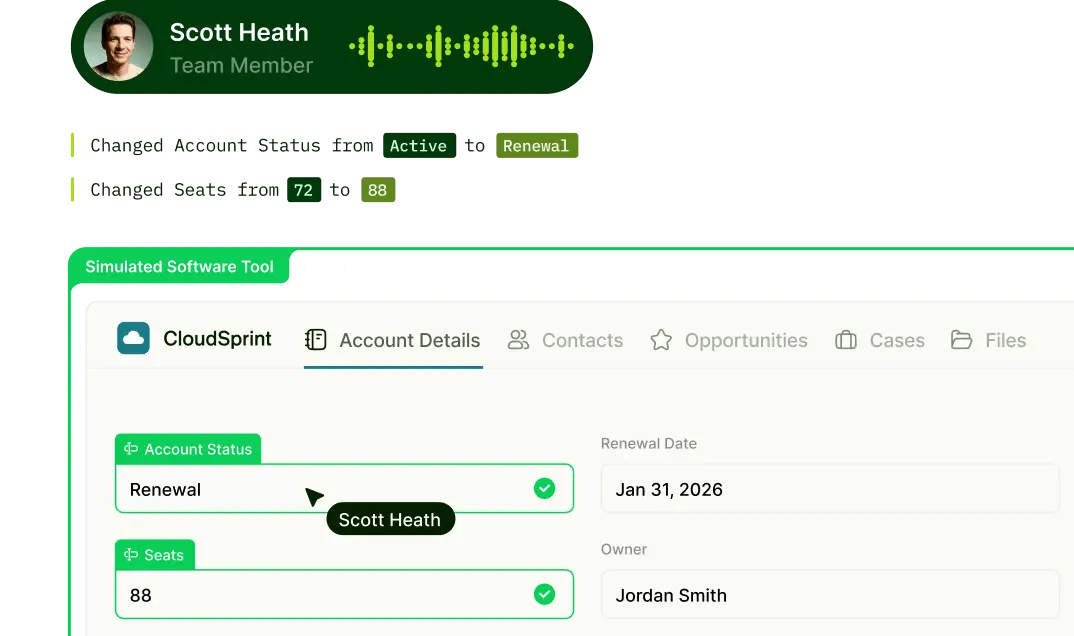
- Assure (Automated QA): Automatically evaluates 100% of interactions rather than relying on random sampling, surfacing trends, risks, and strengths across every agent and channel. It ingests data from Zendesk, Salesforce, HubSpot, telephony, and CRM platforms, then applies scoring models aligned to your rubrics and protocols.
- ReflexAI Studio: A self-serve scenario and scoring model builder that lets teams create simulations from any script, file, or prompt without engineering support.
- Compliance posture: SOC 2, HIPAA, HITRUST, GDPR, and ISO 27001, covering the full range of certifications that regulated contact centers require.
What to know: ReflexAI is purpose-built for high-stakes conversations. Teams running standard transactional scripts may not need the full depth of the platform, though organizations where conversations carry real risk will find the combined simulation-plus-QA model directly addresses their biggest gaps.
SymTrain
SymTrain builds simulations from actual call audio rather than synthetic scripts, which makes practice feel closer to real-world conditions. It's an AI training and coaching platform built specifically for contact center agent ramp.
Best for: Teams with extensive call libraries who want to turn real customer interactions into training scenarios.
Key capabilities:
- Real-call simulation: Simulations are built from recorded customer calls, edited for learning moments and compliance, capturing the actual language, pacing, and objections agents encounter in live work.
- AI coaching: Automated performance scoring based on QA metadata and behavior tagging, with feedback delivered immediately after each simulation.
- Scenario branching: Supports branching logic and job-specific scenarios across service, sales, and support roles.
- Integrations: Connects with CRM, LMS, and QA tools to pull interaction data and push performance results.
What to know: Content creation is faster when real call audio is available. Teams without a library of recorded calls may find setup more involved, since the platform's strength depends on having existing interaction data to work from.
Whatfix Mirror
Whatfix Mirror combines pre-production simulation with on-the-job performance support, so agents practice workflows in a cloned environment and then receive real-time in-app prompts when they go live. It's part of a broader digital adoption platform (DAP), software designed to help employees learn and use enterprise tools more effectively.
Best for: Teams that need to train agents on complex software navigation alongside customer conversations.
Key capabilities:
- Software simulation: Replicates CRM, help desk, and ERP environments without engineering resources, letting agents practice workflows in a safe sandbox.
- AI roleplay: Configurable customer personas with conversational practice and scored feedback.
- In-app guidance: Flows, Smart Tips, and Task Lists that support agents during live work, not just in training.
- Self-service help: An AI-powered assistant trained on internal knowledge bases and SOPs, accessible within the tools agents use daily.
What to know: Teams looking purely for conversation simulation may find the product broader than their immediate need, though the in-app guidance layer adds value for organizations where tool navigation is a meaningful part of agent performance.
Observe.AI
Observe.AI operates on live call data rather than simulated practice, making it a strong fit for teams that want to improve performance through post-call analysis and in-the-moment agent guidance. It's a conversation intelligence platform that scores live calls in real time.
Best for: Contact centers that need real-time call scoring, compliance monitoring, and coaching insights from actual customer conversations.
Key capabilities:
- Live call scoring: AI evaluates calls as they happen and after, flagging compliance and performance gaps based on customizable criteria.
- Agent AI copilot: Prompts agents during calls with suggested responses and compliance reminders, reducing the need for supervisor intervention.
- Coaching workflows: Converts flagged interactions into structured coaching sessions, with specific moments and language tied to performance scores.
- Reporting: Trend dashboards by agent, team, and topic with drill-down capabilities.
What to know: Teams that also need pre-hire or pre-live simulation training will need to pair Observe.AI with a separate simulation platform, since the product focuses on analyzing and coaching from real interactions rather than creating practice environments.
Cresta
Cresta works during live conversations, not before or after them. It uses customer interaction data to generate coaching insights and deliver in-call prompts, functioning as a real-time AI assistant for contact center agents.
Best for: Contact centers that want to improve agent performance through in-call prompts and real-time coaching.
Key capabilities:
- Real-time guidance: AI surfaces suggested responses and compliance reminders while agents are on a call, reducing handle time and improving first-call resolution.
- No-code AI orchestration: Lets leaders build custom AI workflows and fine-tune models without engineering support.
- Conversation intelligence: Analyzes interaction patterns to identify coaching opportunities across teams, with trend reporting by agent, team, and call type.
- AI agents: Includes stand-alone AI agents for handling portions of customer interactions, such as authentication or data collection.
What to know: Teams looking for pre-call simulation or onboarding training will need to supplement Cresta with a dedicated simulation platform, since the product is designed to assist agents during real customer interactions rather than provide practice environments.
Playvox
Playvox is a QA and workforce engagement platform built for contact centers, with structured QA workflow management at its core: scorecards, calibration, and coaching workflows designed for quality teams.
Best for: Contact centers that need structured QA workflows, coaching management, and workforce optimization in one system.
Key capabilities:
- Automated QA scoring: Evaluates interactions across voice, chat, and email using customizable rubrics, reducing manual review burden.
- Coaching workflows: Connects QA scores to structured coaching sessions and improvement plans, with tracking and accountability features for managers.
- Workforce management: Includes scheduling, forecasting, and performance tracking alongside QA.
- Integrations: Connects with Zendesk, Salesforce, and major contact center platforms.
What to know: Playvox doesn't offer AI simulation training for agent onboarding or pre-live practice. Teams evaluating it as a Zenarate alternative will need to pair it with a separate training platform.
NICE CXone
NICE CXone covers omnichannel routing, workforce management, analytics, and QA within a single enterprise suite. Teams evaluating it as a Zenarate alternative are typically looking to consolidate multiple tools, not just replace simulation training.
Best for: Large contact centers that want to consolidate multiple tools into a single platform.
Key capabilities:
- Native QA: Built-in quality management with automated scoring across voice, chat, email, and messaging.
- Workforce optimization: Forecasting, scheduling, and performance analytics with real-time adherence tracking.
- Omnichannel routing: Manages all interaction channels within a unified system, with intelligent routing based on agent skills and customer context.
- Analytics: Real-time and historical reporting across the full contact center operation.
What to know: NICE CXone's strength is breadth, though that also means a longer implementation timeline and higher total cost of ownership than a point solution.
How should contact center leaders compare Zenarate alternatives?
Your escalation rate, your QA rubric, and your compliance requirements are specific. Generic feature checklists miss the operational tradeoffs that matter most when agents go live.
Test realism against real escalation patterns
The question isn't whether a platform has personas. It's whether those personas can simulate the specific emotional dynamics your agents will actually face: a patient who's frightened, a customer who's been transferred three times, a caller in crisis. Platforms built from real call audio, like SymTrain, capture the actual language and pacing agents encounter in live work. Platforms with configurable emotional personas, like ReflexAI, let teams script specific emotional arcs and test whether agents can de-escalate or maintain protocol under pressure.
Compare scoring to your QA rubric
Simulation scoring is only useful if it maps to the criteria your QA team already uses. If your QA team measures 12 specific behaviors and your simulation platform only scores 5 generic ones, you're training agents to pass a test that doesn't exist. Teams that run custom scorecards measuring protocol adherence, empathy, or compliance-specific language need a platform that supports custom scoring dimensions. Some platforms, like ReflexAI's Assure, use the same scoring model for both simulation and live QA, closing the gap between training and operations. Does your current platform score the same behaviors your QA team measures?
Check software simulation and integration fit
Agents in most contact centers don't just talk. They navigate CRMs, ticketing systems, or EHRs simultaneously, and a platform that only simulates conversation leaves a gap in operational readiness. Let's say an agent can de-escalate a billing dispute but can't process a refund in Salesforce while maintaining empathy. That call still gets transferred. The question is whether the platform can simulate those tool environments alongside the conversation, and whether it integrates with the systems your team already uses. Which tools do your agents navigate during live calls - and can your training platform replicate them?
Validate reporting by cohort and channel
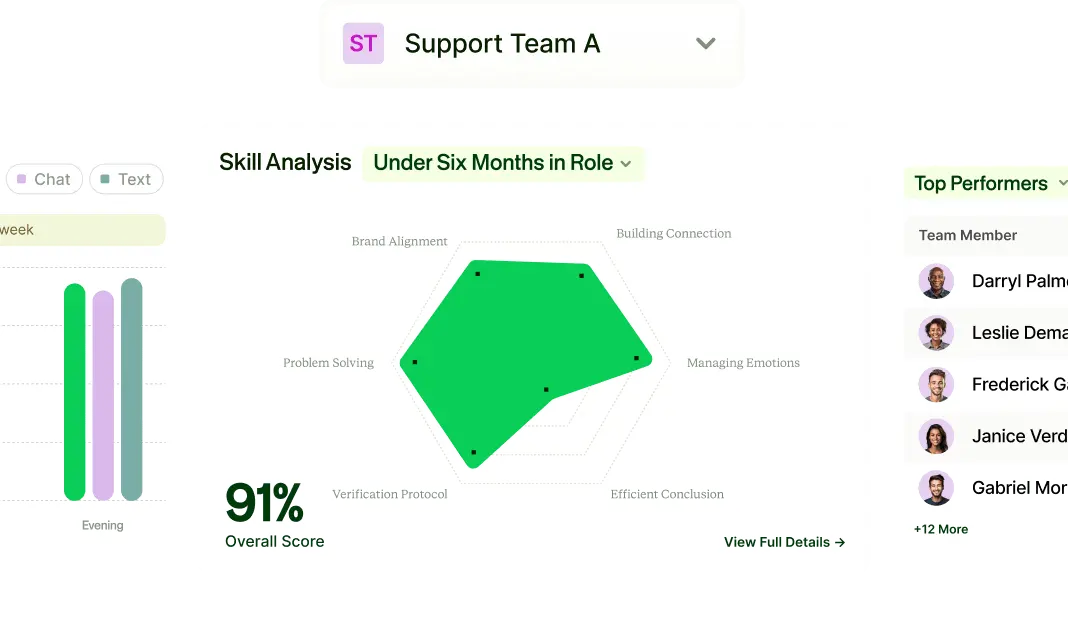
A single agent's score is less useful than a pattern across a team, a channel, or a cohort of new hires. Let's say your Q4 new hire cohort is scoring 15% lower on empathy than your Q3 cohort. That's a training design problem, not an agent problem, and you need reporting that surfaces it before those agents take 500 live calls. The question is whether the platform surfaces aggregate trends by agent group, call type, or training cohort. Can you identify which cohort or channel is underperforming before it shows up in customer complaints?
Review security and compliance requirements
A platform that can't sign a BAA or doesn't meet HITRUST requirements will stall in legal review, regardless of how good the feature set looks. Contact centers in healthcare, financial services, and crisis response should verify certifications before shortlisting:
- SOC 2 (confirm Type I vs. Type II)
- HIPAA (confirm BAA availability)
- HITRUST CSF certification
- GDPR and ISO 27001 for international operations
Has your legal team confirmed which certifications are non-negotiable for your organization?
When is ReflexAI the right Zenarate alternative?
Most platforms on this list handle either simulation training or QA, but not both. ReflexAI's Prepare and Assure products share the same platform, meaning training outcomes are directly connected to live QA results.
You need simulation and automated QA in one platform
When a new compliance requirement changes your call script, you update the simulation and the QA rubric in the same system, and both changes go live simultaneously. When a specific interaction pattern drives escalations, you can convert that flagged call into a simulation and train the entire team on it within 24 hours. Teams can see whether the behaviors practiced in simulation are actually showing up in monitored interactions, closing the loop between training and operations in a way that simulation-only or QA-only platforms cannot.
You need practice that mirrors live tools
ReflexAI's software overlays let agents practice navigating CRMs, EHRs, or other internal systems at the same time as the simulated conversation, not in a separate module. An agent who can handle a difficult customer but can't find the right account record or update a ticket correctly is still going to escalate the call. The software simulation layer ensures agents practice the full workflow, not just the dialogue.
You need high-stakes readiness across every conversation
ReflexAI is built for organizations where conversations carry real risk. The platform's compliance posture, including SOC 2, HIPAA, HITRUST, GDPR, and ISO 27001, and its focus on 100% QA coverage rather than random sampling reflect this design priority. When every conversation matters, you can't rely on sampling 2% of calls and hoping the other 98% went well.
Schedule a demo to see how ReflexAI connects simulation training to 100% QA coverage.