










Contact center workforce optimization (WFO) ensures that the right number of skilled agents are available to help customers at the right time, while giving agents the training and feedback they need to do their jobs well. A contact center WFO strategy connects scheduling, quality review, performance tracking, and analytics so that each one informs the others. A good program keeps service levels steady without keeping agents on back-to-back calls all shift. Below, we explain each component of an effective contact center WFO program and review how to turn a problem like a skipped identity check into practice before an agent's next live call.
Summary
- Contact center WFO remains a largely manual process. Only 19% of contact centers forecast and schedule across all supported channels, and 45% still make intraday staffing adjustments by hand, according to ICMI's 2026 research.
- The hardest calls are increasingly left to human agents. As AI automates routine tasks, contact centers still need human expertise for complex or emotionally sensitive interactions. In a Gartner survey published in February 2026, nearly 80% of service leaders planned to move some agents into new roles because of this shift.
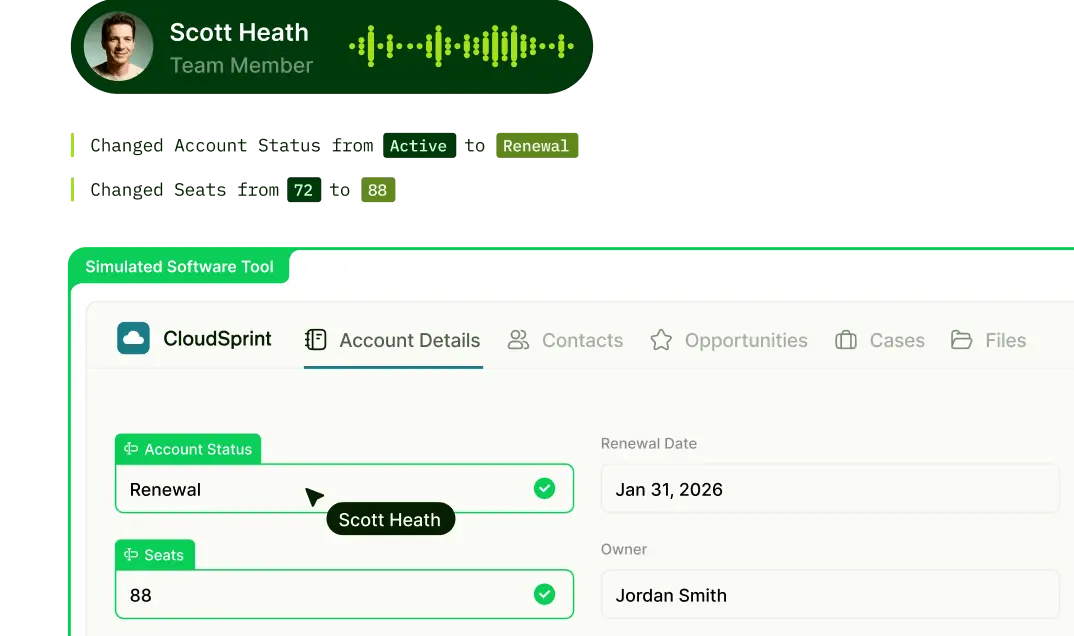
- Quality assurance (QA) insights help guide contact center WFO. ReflexAI's Assure scores conversations across calls, chats, and messages, so quality teams can see patterns that a small manual sample misses.
- Practice helps agents fix the problems QA flags. When QA flags a problem on a call, like a skipped identity check, the agent can rehearse that situation in a simulation before the next live call. Because practice and live calls are scored on one set of criteria, the team can then see if the agent's live calls improved.
- Simulation practice shortens onboarding. When new hires get up to speed faster, managers can schedule them for difficult calls sooner. Lines for Life cut manual training time by 59% after adding ReflexAI's AI roleplay simulations to new-hire onboarding.
Core components of contact center workforce optimization
Contact center workforce optimization uses a combination of technology and people management to optimize contact center efficiency. It combines the following components:
- Forecasting: predicts how many calls, chats, and messages will come in, by channel and time of day.
- Scheduling: assigns agents with the right skills to shifts that cover the forecast.
- Quality monitoring: reviews recorded calls and chat transcripts and scores them against the team's standards.
- Performance management: turns quality scores and operational metrics into goals and coaching for each agent.
- Interaction analytics: searches recordings and transcripts for patterns, like a jump in transfers on one queue.
- Training and coaching: gives agents practice and feedback on the skills quality reviews show they need, before their next live call.
Workforce management (WFM) covers forecasting and scheduling, the two steps that determine how many agents a team needs and when. WFO adds quality monitoring, performance management, and interaction analytics, which measure how well agents handle each conversation and show where they need coaching.
Workforce management as the operational foundation
Workforce optimization starts with workforce management. Planners forecast contact volume by channel and by interval, then build schedules that cover the forecasted volume with agents who have the right skills. During the day, they adjust the schedule when volume spikes or agents call out. Planners should also treat coaching and practice as scheduled work, blocking time for both just as they do for breaks and team meetings, before call volume fills the day.
Much of the forecasting and scheduling work still happens by hand. In 2026 research published by ICMI, only 19% of contact centers forecast and schedule across all supported channels, and 45% still make intraday adjustments manually. As a result, many teams react to staffing shortfalls as they happen instead of planning ahead for them.
Quality management
Quality management measures how well agents handle each conversation. Part of the process involves reviewing recorded calls and chat transcripts. A quality analyst scores each interaction using a scorecard that covers items like identity verification, accuracy, empathy, and resolution.
The results go to the agent's supervisor, where they inform coaching sessions and decisions about who needs retraining. In many programs, the formal QA process ends once a call is scored. What happens next depends on how much time the supervisor has for coaching.
Performance management and analytics
Performance management turns individual results into goals. Supervisors combine quality scores and operational metrics into a scorecard for each agent, then set targets and review progress in one-on-ones. Interaction analytics adds context by searching a larger pool of recordings and transcripts for patterns, like an increase in billing complaints or a jump in transfers on one queue.
In ICMI's State of the Contact Center 2026, 23% of leaders said turning metrics data into actionable insights was their biggest challenge. Metrics can show that a problem exists, but not what caused it or how to fix it.
Benefits of contact center workforce optimization
A well-run contact center WFO program has three main benefits.
- Cost effectiveness: staffing to match demand leaves fewer idle hours and less unplanned overtime to pay for.
- Better agent engagement: predictable schedules and regular coaching help reduce burnout, which CX Today ties to "absenteeism, turnover, and declining customer experience."
- Improved customer satisfaction: when enough agents are on shift, customers spend less time waiting.
Challenges facing contact center WFO in 2026
The two forces making WFO harder in 2026 are high turnover and AI. In ICMI's 2026 survey, 42% of leaders reported annual turnover above 50%. When an experienced agent leaves, planners have to cover that agent's shifts with less experienced staff until a replacement is hired and trained. In the meantime, customers wait longer or reach agents who can't yet resolve their issue.
Also, as AI takes over more routine customer issues, human agents spend more of their day on difficult calls. In a Gartner survey of 321 service leaders, nearly 80% planned to move at least some agents into new roles for this reason. Add to this that AI adoption is outpacing effective use in many contact centers. A 2026 survey commissioned by ReflexAI through GLG found that 85% of 109 contact center leaders had deployed at least one AI tool for training or QA, but only 29% said they were using AI effectively.
What QA insights add to workforce optimization
QA insights show patterns across agents, teams, and queues that a small manual sample may miss. Since legacy QA depends on analysts scoring a handful of calls per agent each month, most conversations aren't reviewed. So if agents on the billing line keep skipping a required disclosure, nobody may notice until a customer complains or a call escalates.
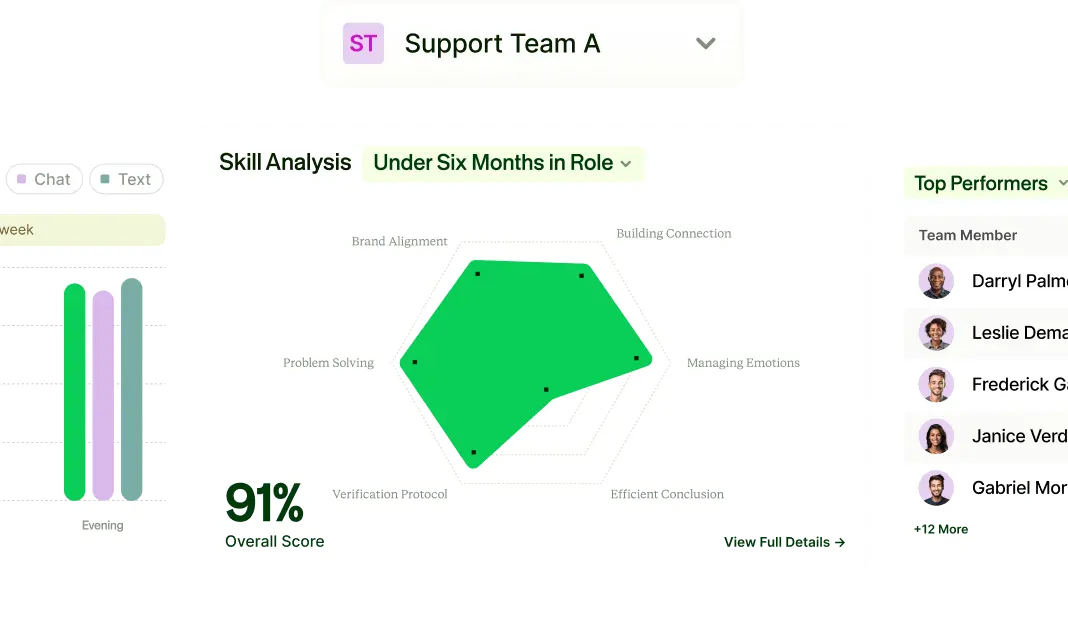
Assure, ReflexAI's contact center QA platform, can score up to 100% of interactions across calls, chats, and messages, well beyond the sub-10% sample typical of manual QA. Its dashboards show managers trends by agent, team, channel, or topic, and teams can customize scoring to measure their own protocols and standards.
QA leaders can use these insights to decide which scenarios each agent should practice. ReflexAI's guide to choosing a contact center QA platform lists scalability and scoring dimensions as the first factors to compare.
Most WFO programs track these key performance indicators (KPIs):
- Average handle time (AHT): the total time an agent spends on a contact, including hold and after-call work.
- First contact resolution (FCR): the share of issues resolved without the customer having to contact the center again.
- Customer satisfaction (CSAT): how customers rate the interaction.
- Occupancy: the share of logged-in time agents spend handling contacts.
- Schedule adherence: how closely agents follow the schedule WFM built.
QA insights can explain why these numbers change. For example, suppose FCR drops on one queue. A team with QA insights across that queue can check if the repeat contacts trace back to one policy explanation, one product issue, or a few agents struggling with the same call type.
Turn QA findings into practice before the next live call
When an agent can practice the exact situation that went wrong, their behavior changes. This is how QA findings can become a meaningful blueprint for contact center WFO optimization. Most WFO programs formalize forecasting and evaluation, but don't provide a concrete way for agents to improve performance. As CX Today puts it, "the model that optimized time does not automatically optimize people."
Connecting practice data with live-call data
When practice results and QA scores are stored in different systems, a supervisor who coaches an agent on de-escalation can't easily check if the coaching helped on the agent's next live call. By scoring practice calls and live calls on the same framework, supervisors can see what an agent improved on in practice and if that improvement showed up on live calls.
Turning a flagged interaction into a practice scenario
When training an agent, start with a specific flagged interaction. For example, QA flags an agent who skipped a required identity check when the caller pushed back. You can then turn that moment into a simulated scenario and assign it to the agent and anyone else QA flagged for the same mistake.
Prepare, ReflexAI's AI simulation training platform, gives agents a place to rehearse that call with AI personas that adapt in real time to what the agent says and how they say it. After each attempt, agents get scores on empathy, accuracy, tone, and protocol adherence. They can practice on their own, without a manager present. ReflexAI's guide to QA vs. simulation training explains how QA and practice fit together.
How Prepare and Assure work together today
Teams use Assure to decide what each agent should work on next, based on QA insights from scored conversations. Agents then practice those skills in Prepare. Because Prepare and Assure share a common scoring framework, practice scores and live-call scores can be compared directly. Managers can check if agents who practiced a scenario improved on those dimensions in live calls.
Both products are part of ReflexAI's Conversation Performance Platform, which connects practice, coaching, and live performance. Today, Assure's QA insights set coaching priorities, and the team chooses which scenarios to assign. The shared scoring framework then shows before-and-after results. ReflexAI is building toward a platform where live performance continuously informs practice and every evaluation shapes what teams practice next.
How to optimize your contact center workforce
Use these six steps to add QA-based practice to an existing WFO program:
- Strengthen the workforce management foundation. Forecast every channel you staff and track schedule adherence. Agents need time off the phones for coaching and practice, so the schedule has to include it.
- Score enough interactions to catch recurring problems. Rank what QA finds by how often each problem occurs and how much risk it poses.
- Turn the top problems into practice scenarios. Base each scenario on a real call QA flagged, and assign it to the agents who made that mistake.
- Protect practice time. Count simulation time as shrinkage, the share of paid hours set aside for work other than handling contacts. That way, practice stays on the schedule during busy weeks.
- Score practice and live calls the same way. Then compare AHT, FCR, CSAT, and quality scores before and after practice for the agents who trained.
- Use simulations during onboarding. Have new hires rehearse difficult call types before they take them live.
With turnover as high as ICMI reports, most contact centers are always onboarding someone. New hires who get up to speed faster can take difficult calls sooner, so the schedule relies less on agents who aren't ready yet. Lines for Life, a national nonprofit crisis line, cut manual training time by 59% after adding ReflexAI's simulations to new-hire onboarding. Schedule a demo to see how to turn a flagged call into a practice scenario in Prepare.
Workforce optimization for regulated vs routine conversations
In healthcare and financial services, one missed verification step or misstated term can expose a patient's information or a customer's account. QA and practice therefore must go deeper there than in routine service work. The table below compares the two settings.
What changes | Routine conversations | Regulated, high-stakes conversations |
Cost of a mistake | A frustrated customer or a repeat contact | Regulatory exposure, such as HIPAA in healthcare, and harm to the person on the line |
QA coverage | Broad trends guide coaching priorities | Enough review that a single missed protocol step is caught |
What QA scores | Tone, accuracy, and resolution | The same measures as routine conversations, plus protocol steps like identity verification and required disclosures |
Practice focus | Common call types and product knowledge | The exact protocol under pressure, such as verifying a patient's identity while the caller is upset |
What leaders must show | KPI trends over time | Documented protocol adherence over time |
Practice helps agents follow required steps more consistently. In a ReflexAI study of 174 call center agents, protocol compliance scores improved by 18% for agents who completed a high number of simulations.
ReflexAI's contact center training and QA software adapts to whichever industry a team works in. A health system's patient access team can score and practice HIPAA identity checks, while a bank's card services team can focus on account verification and required disclosures.
See how your QA findings can turn into practice
Most contact centers already forecast, schedule, and score calls. What's often missing is a structured way for agents to practice what QA flags before their next live call. ReflexAI helps teams practice, measure, and improve their most important conversations. Assure shows each agent what to work on, and Prepare gives them a realistic place to rehearse it.
Because both products use one scoring framework, managers can compare an agent's practice scores with their live-call scores. Read how Verstela replaced more than 1,000 hours of manager time with Prepare simulations in the Verstela customer story.
Schedule a demo to see how Assure and Prepare would fit your team's call types and existing workforce management tools.
Frequently asked questions about contact center workforce optimization
What is the best WFM software for call centers?
The best WFM software for a call center forecasts and schedules every channel your team staffs and automates intraday adjustments. Those are the two areas where ICMI's 2026 research found many centers still fall short, with only 19% forecasting across all supported channels. The software should also share adherence and occupancy data with your QA and coaching tools, so supervisors can see staffing and quality results in one place.
What is workforce optimization in contact centers?
Workforce optimization (WFO) in contact centers is a strategy for having the right number of skilled agents available when customers need them, and for helping those agents improve. It combines forecasting and scheduling with quality management, performance management, and analytics.
What are the latest trends in contact centers?
The biggest trend in 2026 is AI taking over routine contacts, which leaves human agents with more of the complex and emotionally sensitive calls. In a Gartner survey, nearly 80% of service leaders planned to move some agents into new roles because of this shift. Contact centers are also building quality frameworks for AI-assisted interactions and using simulations to prepare agents for difficult calls.
How is workforce optimization different from workforce engagement management?
Workforce engagement management (WEM) keeps WFO's planning and quality evaluation but puts more focus on coaching and agent development. CX Today describes traditional WFO as "built for control and predictability," while WEM is built around supporting the agents who handle the calls.
Do AI-assisted interactions need their own quality framework?
A majority of leaders say yes. In ICMI's 2026 report, 54% said AI-assisted interactions need their own quality framework. When an AI assistant suggests responses or handles part of a contact before passing it to an agent, the framework should score how well the agent used that help and how smoothly the handoff went, along with accuracy and empathy.