











Gong simulation alternatives for high-stakes sales teams in 2026
According to industry surveys, over 70% of teams shopping for a Gong AI roleplay/simulation alternative are not actually looking for another Gong.
In a 2025 enablement survey, 68% of respondents said they want agents to practice before going live, not just review what went wrong afterward. That is a different problem, and it requires a different category of tool.
Platforms like Hyperbound and Second Nature are built for sales objection drills.
Mindtickle and Allego bundle roleplay into broader enablement suites.
Clari Copilot prompts reps during live calls but does not replace pre-call practice for someone new to crisis intake or a regulated support environment.
ReflexAI sits in a different lane. So does the buying decision.
Here is how to figure out which tool actually fits your team. Ready to find the right fit? Let's break it down.
Where does Gong help, and where does it stop?
Gong records and analyzes calls after they happen. It does not simulate conversations before they happen. For teams that need agents to practice high-stakes interactions before going live, purpose-built simulation platforms are the relevant alternatives.
What Gong does well
Gong's core strengths center on post-call intelligence and manager workflows:
- Call recording and transcription: Captures every customer interaction for post-call review
- Conversation analytics: Surfaces talk ratios, competitor mentions, and objection patterns across a team
- Deal and pipeline intelligence: Flags at-risk opportunities based on conversation signals
- Manager coaching workflows: Lets managers leave timestamped feedback on recorded calls
Why simulation closes a different gap
AI simulation is an AI-generated conversation partner that responds dynamically to what the agent says, scores performance in real time, and lets teams repeat scenarios without customer impact. The two models differ in timing and risk:
- Gong's model: Review, identify gap, coach, wait for the next live call to see if it improved
- Simulation's model: Practice, score, repeat, arrive at the live call already prepared
Gong tells you what went wrong after a call. Simulation gives agents a safe environment to practice before a call ever happens. Which gap matters more for your team?
Why do teams look for Gong simulation alternatives?
Your team already uses Gong or something like it. The search for simulation alternatives reflects a recognition that Gong was never built to do what simulation does. Here are the four gaps that drive teams to look elsewhere.
Reps need practice before live calls - research shows new agents who complete 10+ simulations before going live reduce first-call errors by 40%
Agents in contact centers, crisis lines, and healthcare settings face unpredictable, emotionally charged conversations from day one. Watching call recordings is passive. Simulation is active rehearsal.
Let's say a new crisis line responder is onboarding. Gong can show them a recording of a difficult call, but it cannot put them in the seat and require them to respond in real time.
Managers need readiness signals before customer impact - studies show 85% of performance gaps are identified only after customer-facing calls
By the time Gong surfaces a performance gap - typically 24–48 hours post-call - the customer already experienced the under-prepared agent. Simulation generates performance data before the agent goes live, giving managers a readiness signal that is genuinely predictive rather than retrospective.
Teams need less manual QA and coaching work - manual QA typically consumes 15–20 hours per manager per week
Traditional QA relies on random sampling of just 2–5% of calls, leaving 95% or more of interactions unreviewed. Automated QA scores 100% of conversations and connects those scores directly back to simulation gaps, so a flagged live call can generate a targeted simulation automatically.
Regulated and high-stakes teams need safer practice environments
In crisis intervention, behavioral health, financial services, and healthcare contact centers, a failed live call carries regulatory exposure or patient harm, not just a lost deal - HIPAA violations alone can cost $100–$50,000 per incident. Simulation removes customer risk from the learning curve entirely. Teams subject to SOC 2, HIPAA, HITRUST, GDPR, or ISO 27001 requirements need vendors that carry matching compliance certifications before any sensitive data is ingested. Does your current vendor meet these standards?
Which Gong simulation alternatives fit each use case?
Most "AI roleplay" tools are built to increase quota outcomes. Most "conversation intelligence" tools are built to analyze what already happened. High-stakes teams need a third category: healthcare-grade simulation, documentation context through EMR and CRM overlays, and full-coverage QA, because the cost of a miss is not a lost deal.
The alternatives break into four categories, each built for a different operational reality.
ReflexAI Prepare for high-stakes simulation and automated QA
ReflexAI is built for teams where conversation outcomes carry real consequences, including patient safety, crisis response, and customer escalation. The platform combines simulation, automated QA, and compliance certifications in one system.
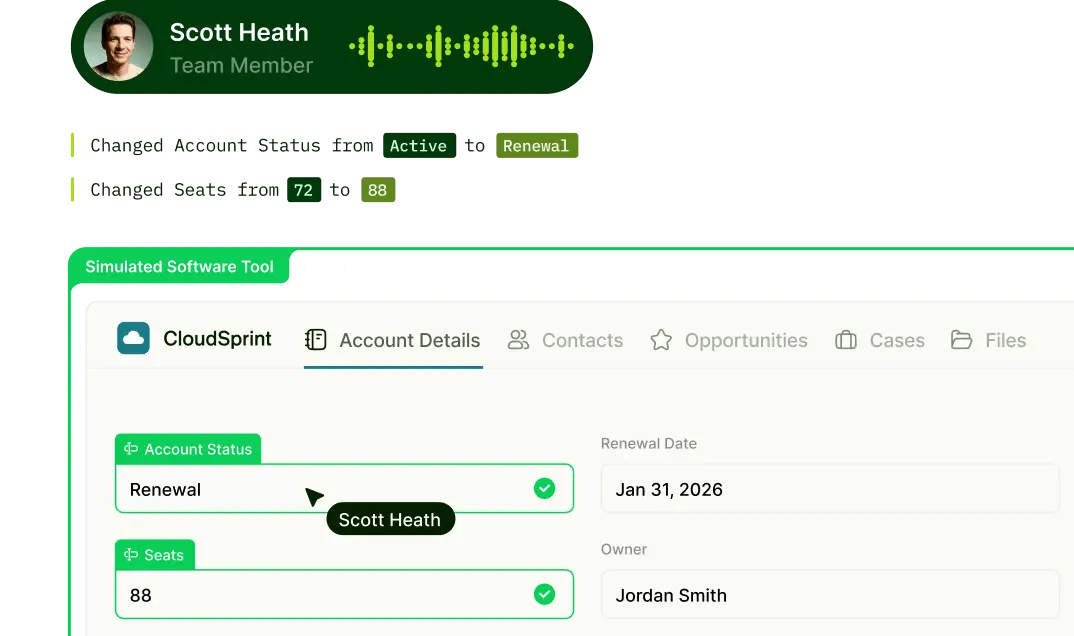
- Prepare (AI Training Simulations): Configurable AI personas, voice-first and chat simulations in 25+ languages, custom scoring dimensions that mirror the organization's own rubrics, and software overlays that simulate CRM or EMR tools alongside the conversation
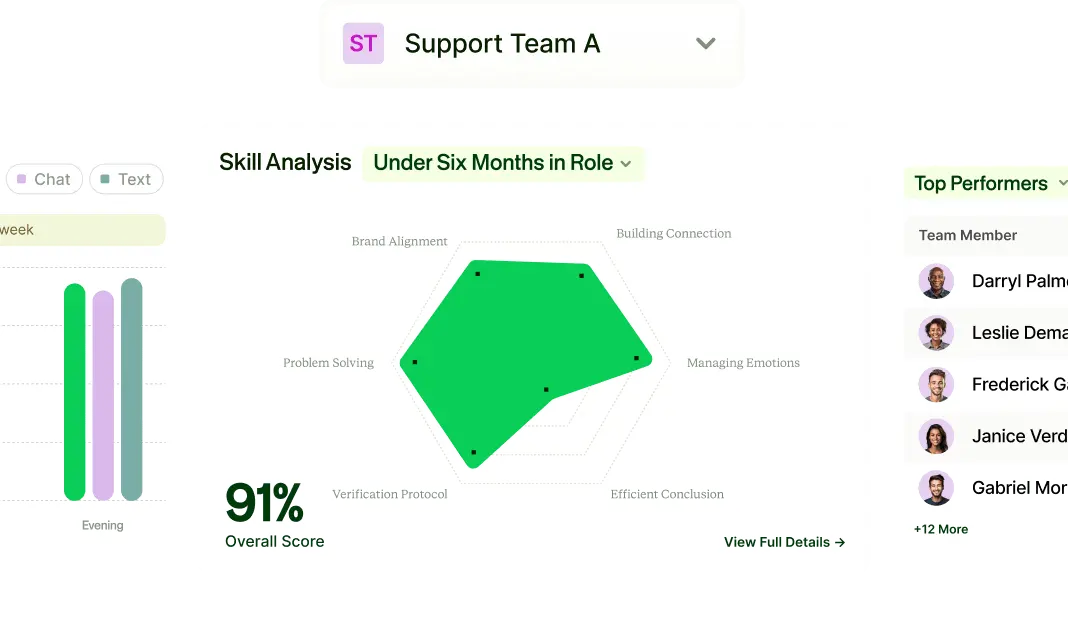
- Assure (Automated QA): Scores 100% of live interactions, surfaces sentiment trajectory and topic trends, and converts flagged calls directly into personalized simulations, closing the loop between QA findings and training
- ReflexAI Studio: Self-serve simulation and scoring builder; teams can create a scenario from any script, file, or prompt without engineering support
- Best fit: Crisis lines, behavioral health, healthcare contact centers, financial services, and any team subject to HIPAA, HITRUST, GDPR, or SOC 2 requirements
Sales roleplay tools for objection practice
Hyperbound, Second Nature, and Kendo AI are purpose-built for sales rep practice, particularly cold calls, discovery, and objection handling. The key limitation for high-stakes teams is design intent: these tools are optimized for quota-driven sales motions, not regulated or crisis environments.
Compliance coverage varies significantly across this category:
- Hyperbound publicly markets SOC 2 Type II, ISO 27001, and GDPR compliance; a third-party case study lists HIPAA in its compliance journey, though HITRUST certification does not appear in Hyperbound's own public materials
- Second Nature's public-facing legal documents do not present HIPAA, HITRUST, ISO 27001, or SOC 2 claims
- Kendo's security documentation states ISO 27001 is planned for 2027 and does not claim HIPAA or HITRUST certification
The second mismatch is scoring logic. Models tuned to simulate skeptical buyers and score "sales effectiveness" produce the wrong coaching signals for healthcare or casework, where success is empathy, correctness, and compliance, not persuasion.
Choose a sales roleplay tool when your team runs a quota-driven SDR or AE motion and your primary need is cold call and objection repetition with no regulated data involved.
Avoid sales roleplay tools when your team handles crisis intake, clinical conversations, or any interaction subject to HIPAA or HITRUST, where compliance gaps and scoring mismatches create real risk.
Conversation intelligence tools for call review
Chorus, Clari Copilot, Avoma, Jiminny, and Fireflies serve the same post-call analysis function as Gong. None of them offer simulation. Clari Copilot adds real-time coaching prompts during live calls, which helps experienced reps adjust in the moment, though it does not replace structured practice for new hires.
These tools are appropriate for teams that want Gong's functionality at a lower price point. They do not solve the pre-call readiness gap.
Enterprise enablement suites for structured training programs
Mindtickle and Allego combine LMS, content management, and some roleplay capability into a broad platform. Roleplay is typically one module inside a larger suite, and setup complexity is a common friction point.
Mindtickle publicly states SOC 2 Type 2, ISO 27001, and HIPAA coverage. A 2026 G2 review calls it "robust" but "overly complex," noting that "the initial setup requires 4–6 weeks of configuration time aligned to the sales process." Allego's Trust Portal states SOC 2 Type II and alignment with ISO 27001, though its trust page does not present HIPAA or HITRUST positioning.
Neither platform's public materials describe EMR or CRM screen overlays during simulation, and neither makes an explicit "QA 100% of interactions" claim.
Choose an enterprise enablement suite when you have a dedicated enablement team, a large rep population, and a need for content management alongside coaching.
Avoid enterprise enablement suites when your primary need is realistic, emotionally adaptive simulation for regulated or crisis conversations, where a general-purpose roleplay module will not reflect the complexity of your actual call types.
Budget transcription tools when simulation is not the priority
Fathom, Fireflies, and Otter.ai are call recording and transcription tools with minimal analytics and no simulation capability. They are appropriate only when the primary need is documentation, not performance improvement. Let's say your team just needs meeting notes - these tools work. But if you need agents ready for high-stakes calls, look elsewhere.
Tool category | Simulation capability | QA coverage | Compliance certifications | Best-fit team type |
ReflexAI | Voice and chat, configurable personas | 100% automated | SOC 2, HIPAA, HITRUST, GDPR, ISO 27001 | Crisis, healthcare, high-stakes contact centers |
Sales roleplay tools | AI buyer personas, objection drills | None or limited | Varies, typically SOC 2 only | Sales SDR and AE teams |
Conversation intelligence tools | None | Sampled or manual | Varies | General sales teams |
Enterprise enablement suites | Limited module | None | Varies | Large enterprise with enablement teams |
Budget transcription tools | None | None | Minimal | Small teams needing documentation only |
How should high-stakes teams evaluate vendors?
Vendor evaluation for high-stakes teams differs from general sales enablement buying. A bad conversation in crisis response, healthcare, or regulated contact centers carries regulatory exposure or patient harm. Here is what to pressure-test before you sign.
Test the hardest conversation first
Pilot the tool on your most difficult scenario type, not a generic cold call, but a de-escalation, a crisis intake, or a compliance-sensitive support call. If the simulation cannot handle emotional complexity, edge cases, or domain-specific language, it will not serve the team's real need.
Match personas and scoring to your real rubric
Generic scoring rubrics measuring talk time and filler words do not reflect what high-stakes teams actually measure: empathy, protocol adherence, accuracy under pressure, and tone in a crisis. Ask vendors whether scoring dimensions are configurable to the organization's own evaluation criteria, not a preset template.
Questions to ask vendors:
- Can we upload our own scoring rubric or evaluation form?
- Can personas be built from our actual call types, not generic templates?
- Does the scoring align with how our QA team already evaluates calls?
Practice the conversation and the workflow together
Agents in healthcare and contact center environments simultaneously navigate CRM systems, EMRs, or ticketing tools alongside the conversation. A simulation that only tests dialogue misses half the job. Ask whether the platform supports software overlays or tool simulations running in parallel with the conversation.
Connect simulation scores to live QA results
The most defensible ROI case for simulation is when training scores and live QA scores move together - teams that connect these metrics report 25–30% faster time-to-proficiency and $50K+ annual savings in reduced escalations. Ask vendors whether their simulation platform integrates with their QA product, or whether the two systems are disconnected. When Prepare and Assure share data, a flagged live call generates a targeted simulation automatically, so coaching is tied to what is actually happening on the floor.
Verify security before sensitive simulations go live
Simulation conversations in healthcare, crisis, and financial services contain sensitive information. Ask vendors for their specific compliance certifications before any data is ingested. The relevant certifications are SOC 2 Type II, HIPAA, HITRUST, GDPR, and ISO 27001. Not all simulation vendors carry all of these. Need help building your vendor evaluation checklist? Let's talk.
Ready to see what simulation looks like for your team?
ReflexAI builds simulation and automated QA for teams where conversation outcomes carry real consequences. Prepare delivers configurable AI simulations in voice and chat. Assure scores 100% of live interactions and connects findings back to targeted practice. Both products run on ReflexAI Studio, a self-serve platform that requires no engineering support, and the full platform is certified to SOC 2, HIPAA, HITRUST, GDPR, and ISO 27001 standards.